Free parent guide:
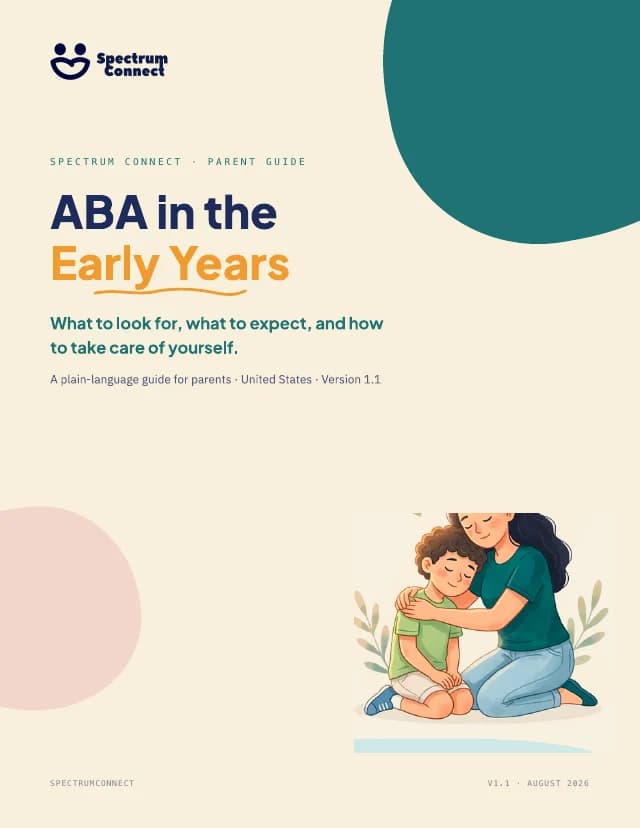
ABA in the Early Years
Two ABA providers can look the same from the outside and give your child very different care. This guide shows you how to tell them apart before you sign.
- United States
- 19 pages
- 18 cited sources
- Version 1.1 · August 2026
What’s inside
- Ten signs of a good provider, each with a question to ask out loud and what a strong and a weak answer sound like
- A bring-to-the-visit checklist you can print or save to your phone
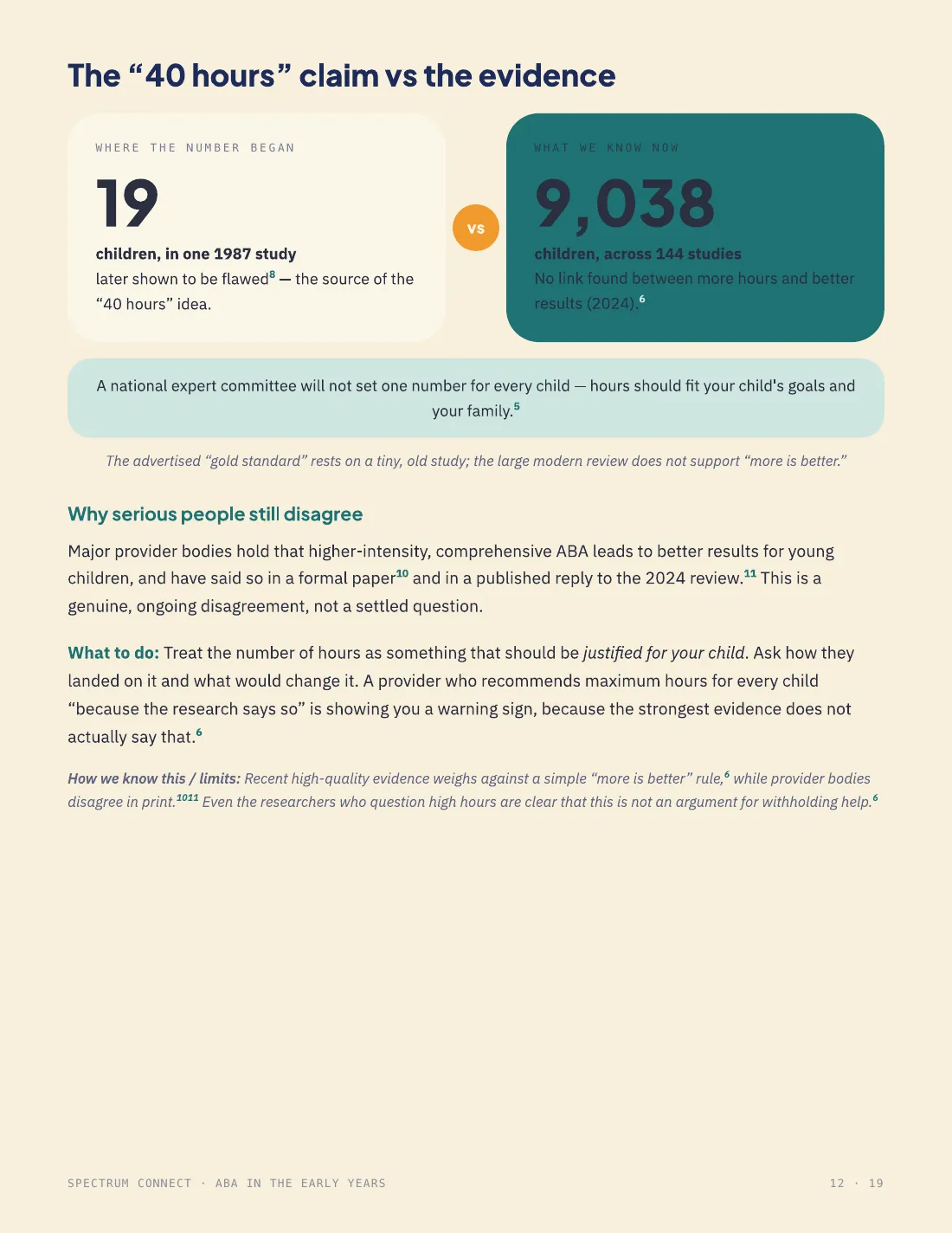
- What the research actually says about “40 hours a week”
- How to read your child’s progress data, and what a hollow report looks like
- Home, clinic, telehealth or school, and who owns the clinic
- What to do if there is only one provider near you
- Looking after yourself, and planning for the change at age 3
Take a look inside
4 of the 19 pages, exactly as they appear in the PDF.
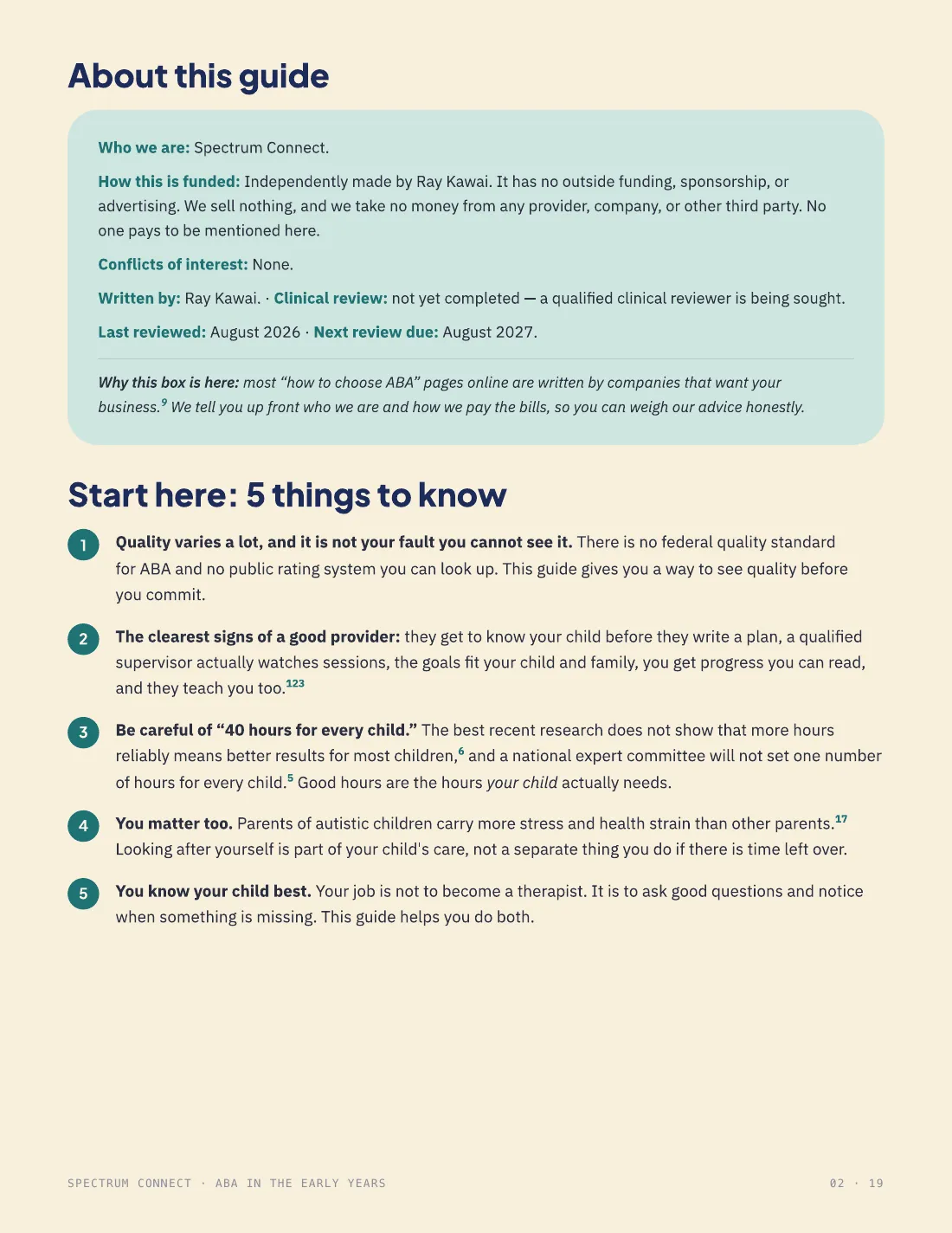
- Open page 2 full size (opens in a new tab)
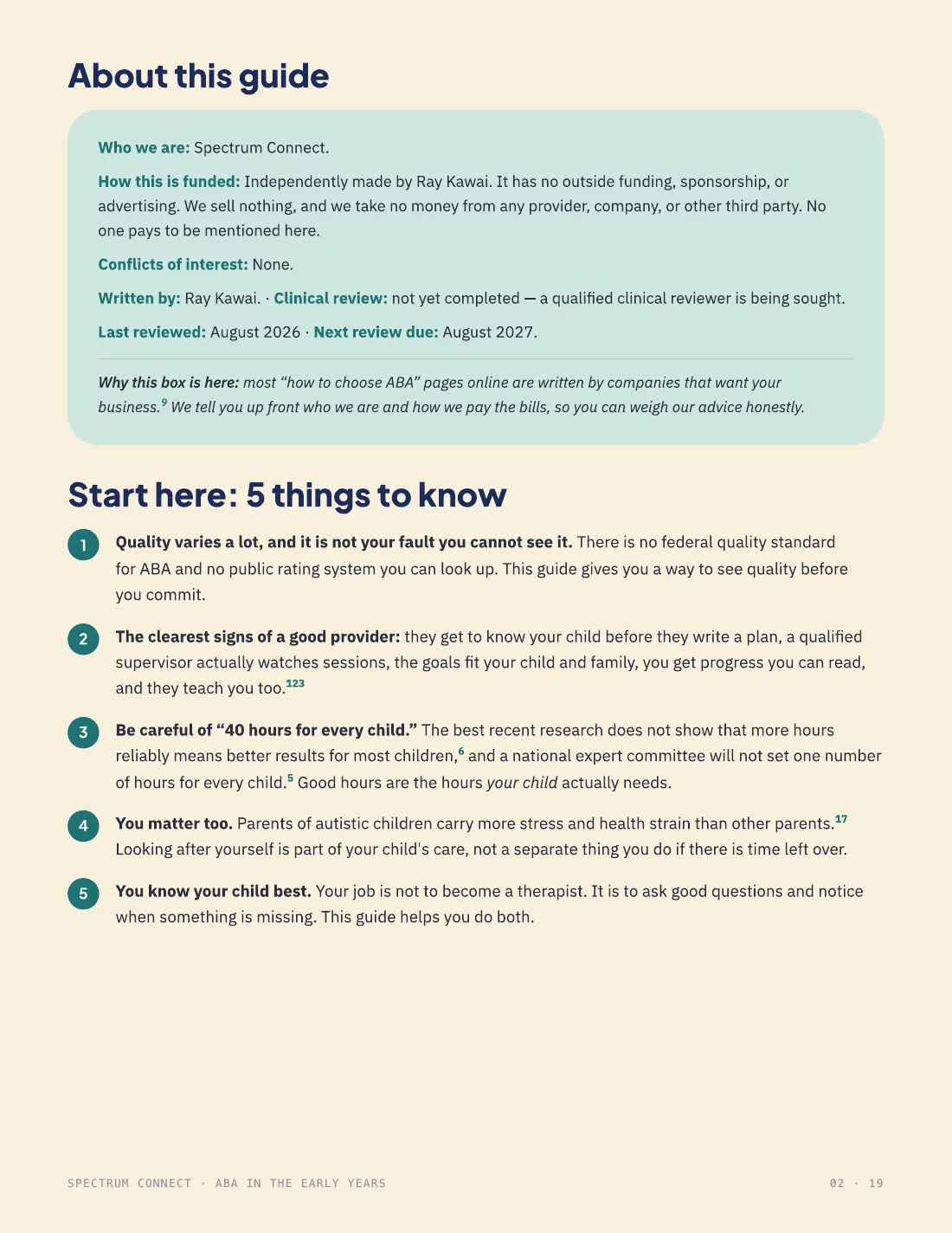
Page 2 of 19
Start here: 5 things to know
- Open page 4 full size (opens in a new tab)
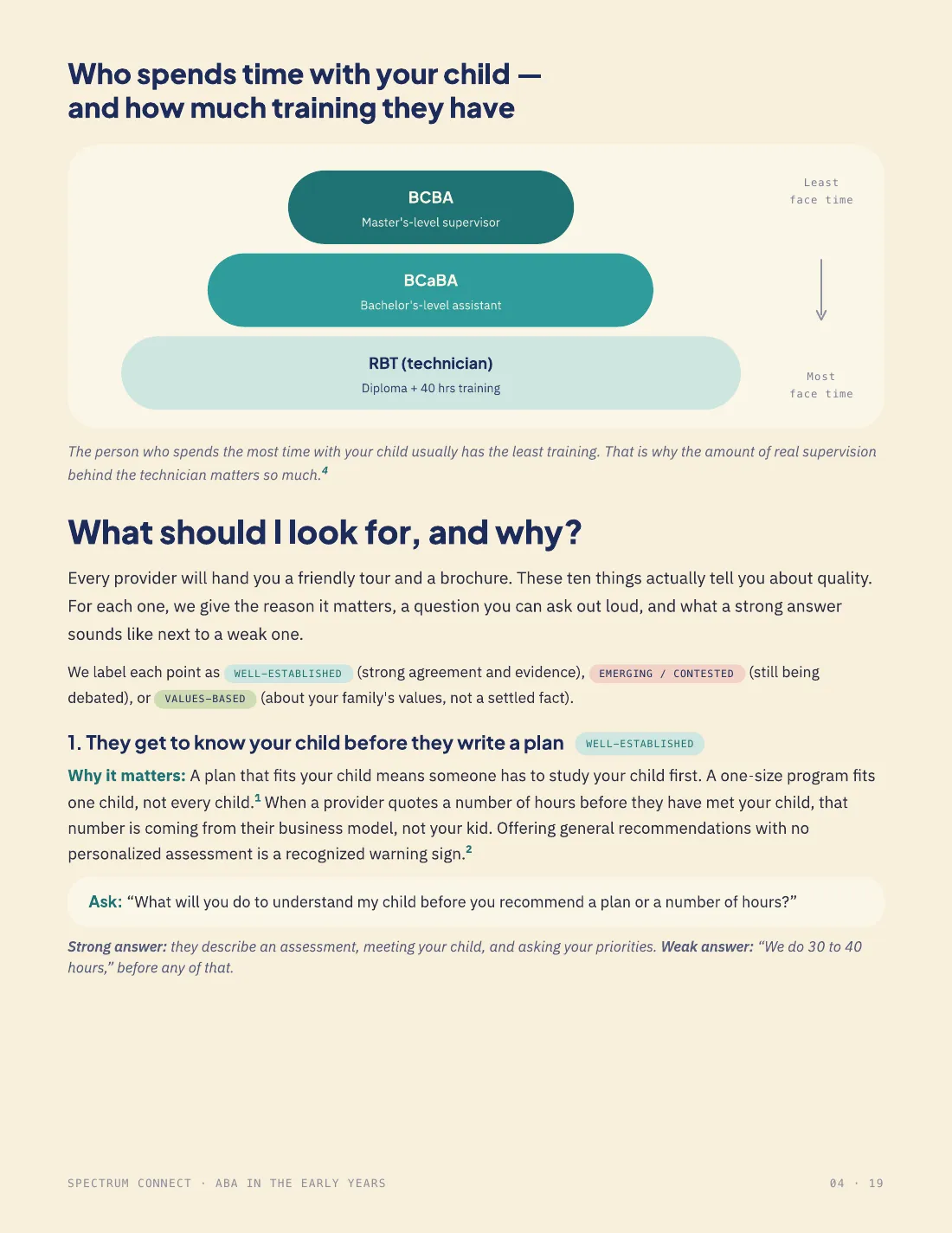
Page 4 of 19
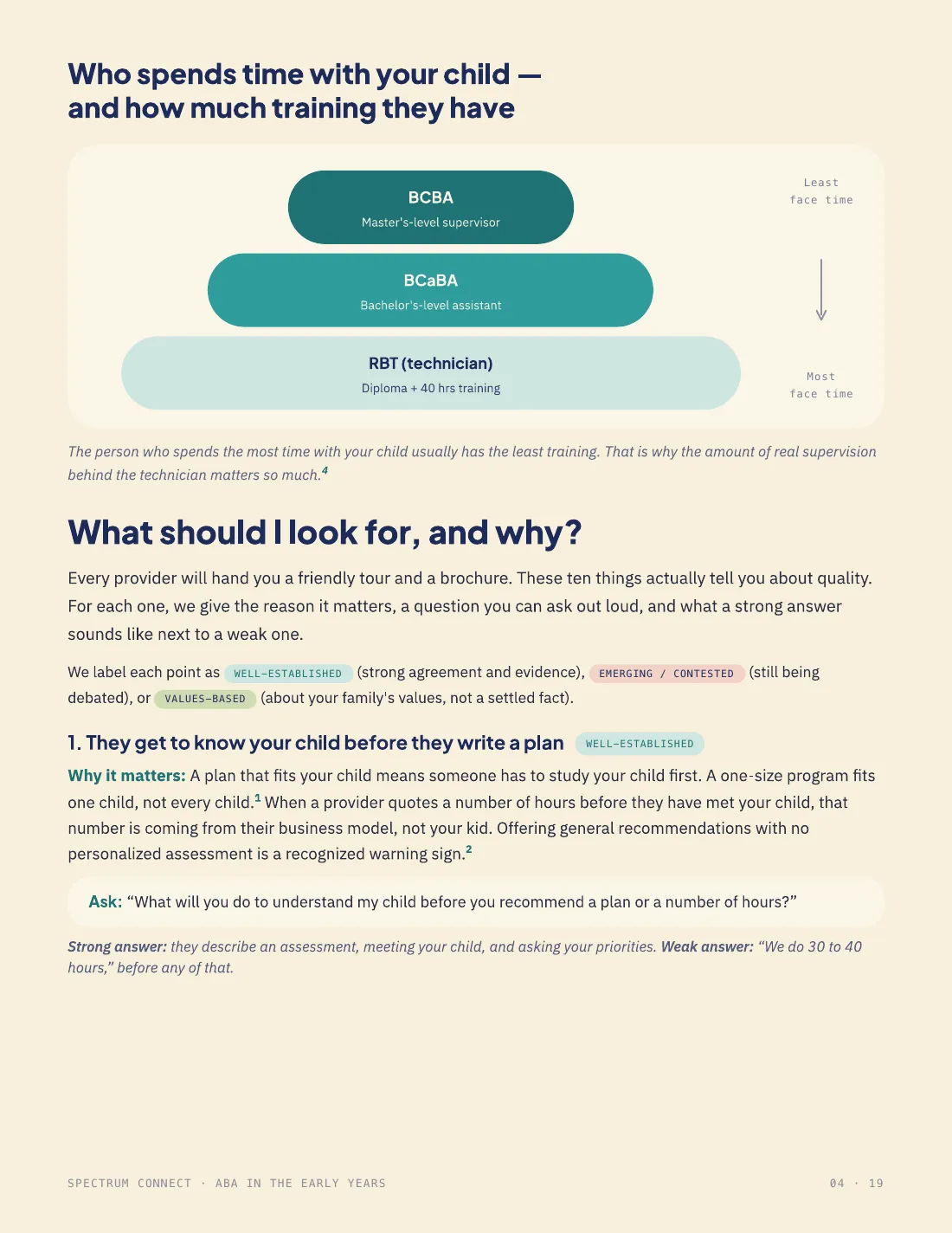
Who actually spends time with your child
- Open page 8 full size (opens in a new tab)
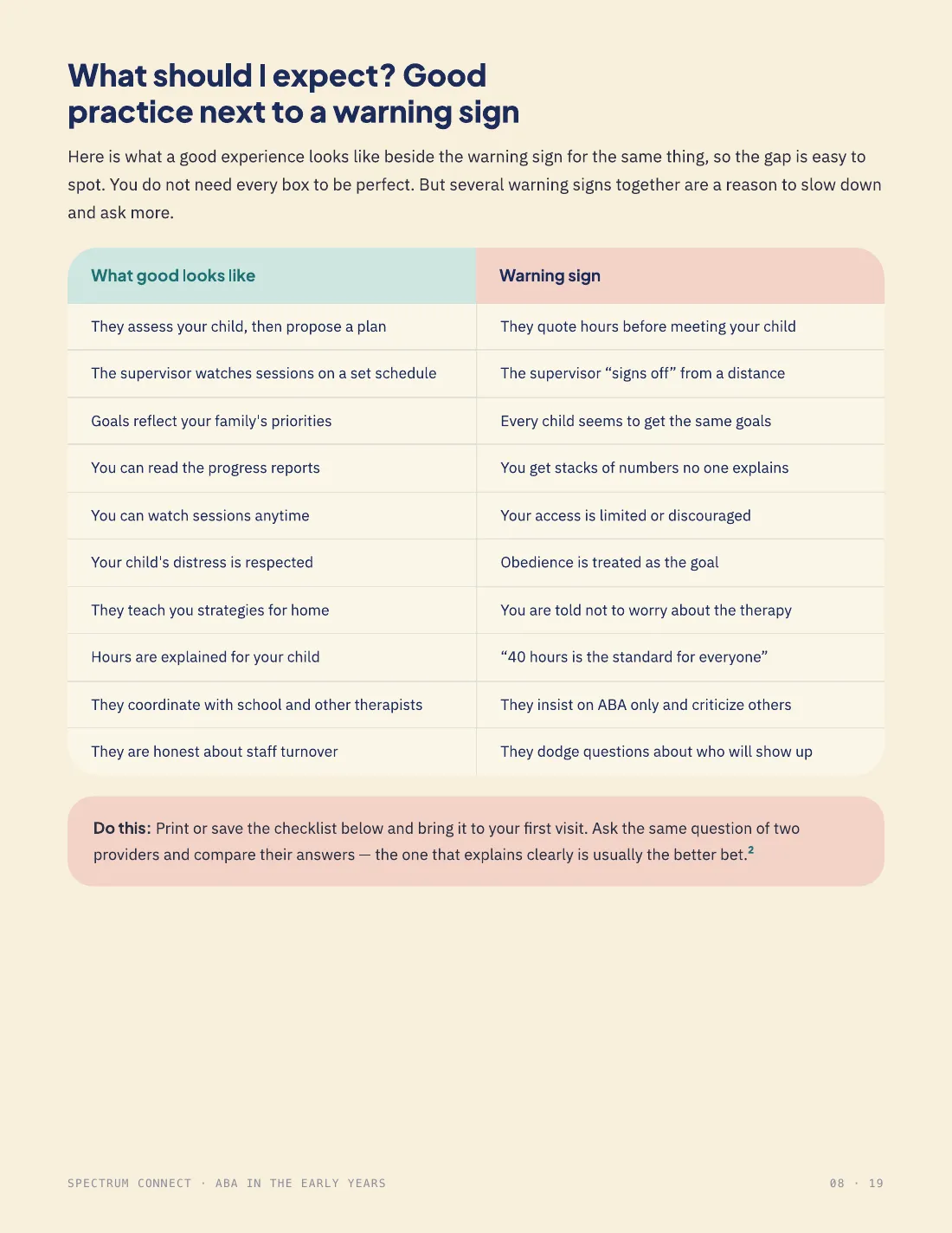
Page 8 of 19
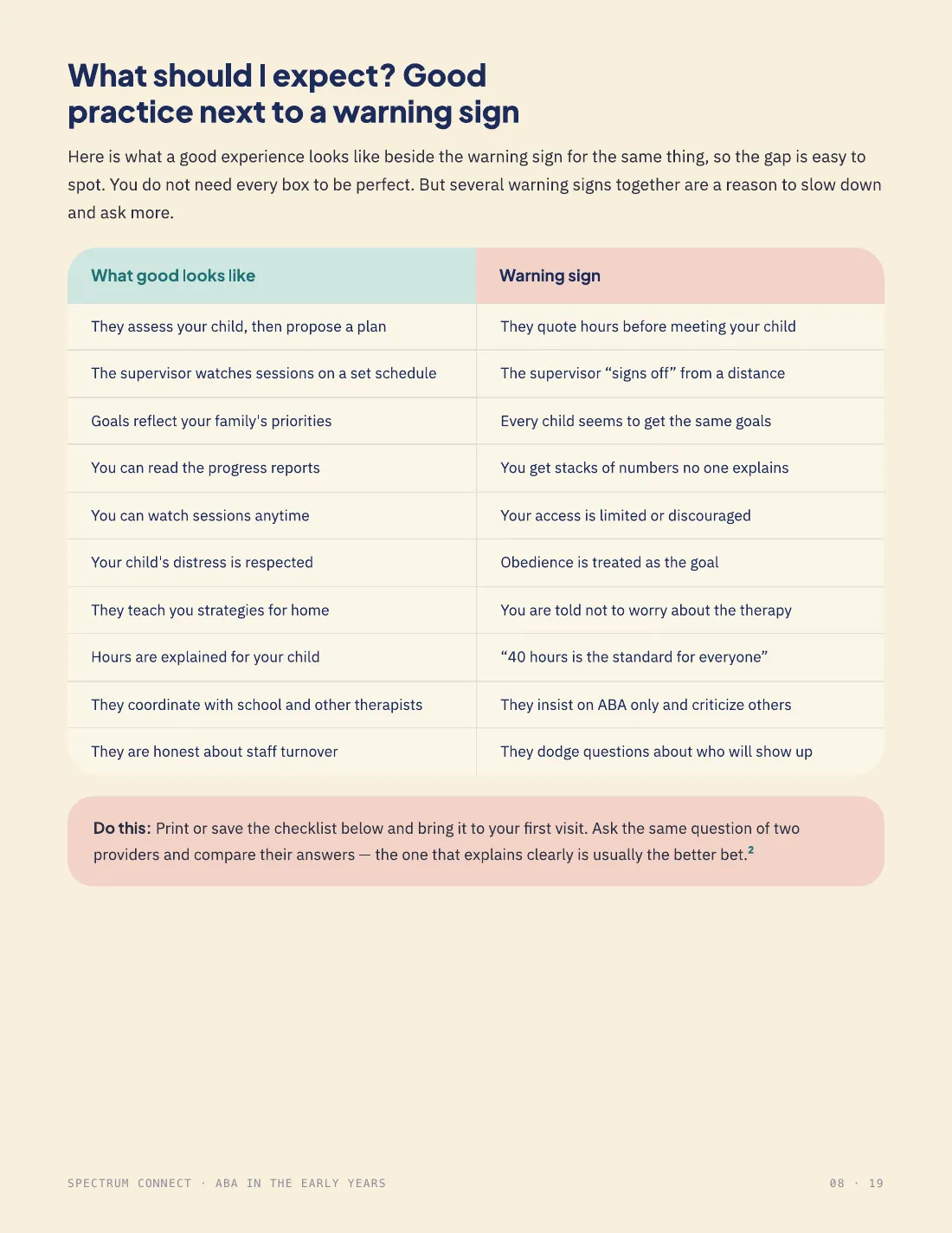
Good practice next to a warning sign
- Open page 12 full size (opens in a new tab)
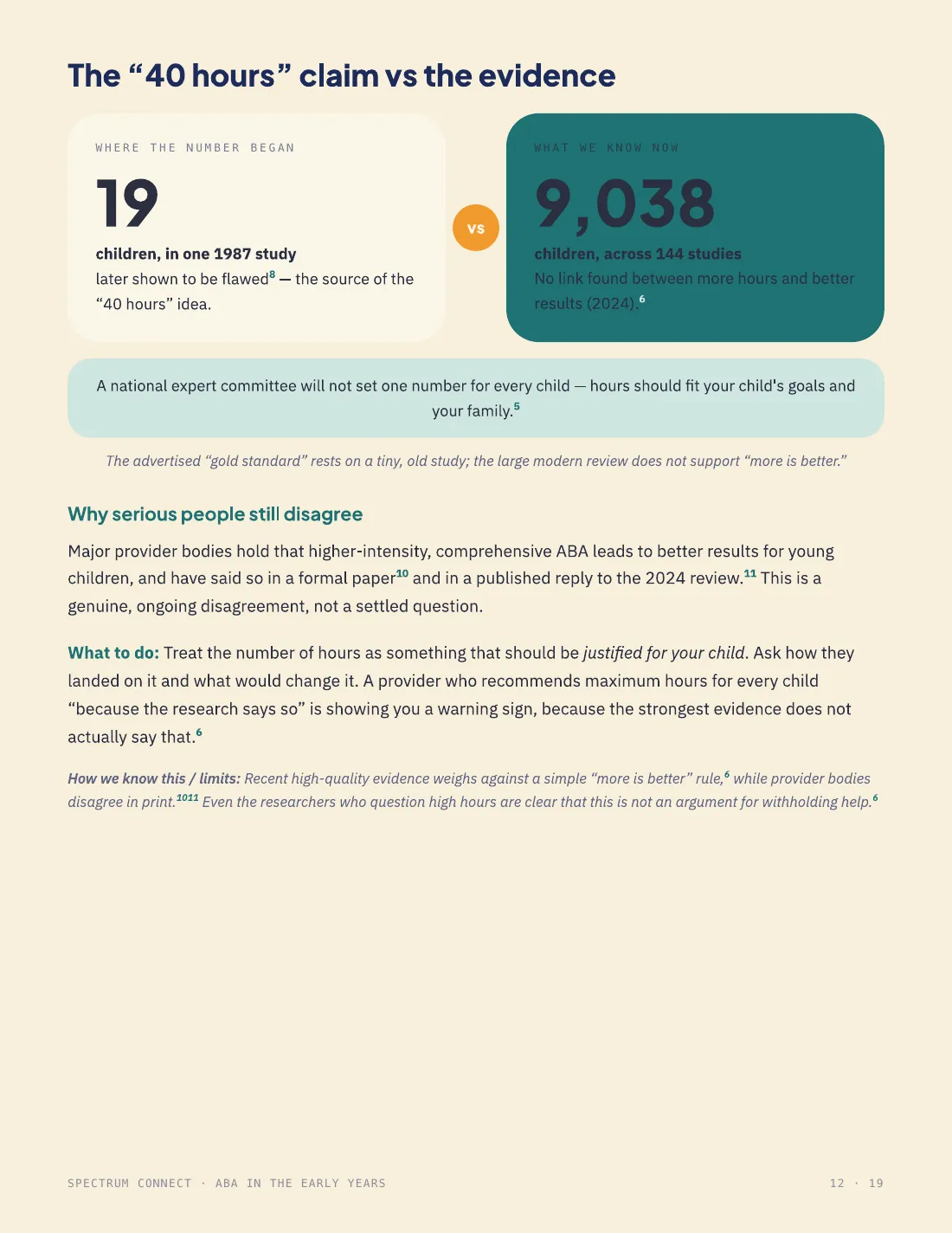
Page 12 of 19
The “40 hours” claim vs the evidence
Why you can trust it
Independent
Made by Spectrum Connect with no outside funding. We sell nothing, and we take no money from any provider. No one pays to be mentioned.
Every fact sourced
Each claim carries a numbered source from a professional body, a peer-reviewed study or a government record, and a label saying how settled it is.
Written for parents
Plain language, a question to ask out loud for every point, and what a strong and a weak answer sound like.
This guide tells you what to look for and what to expect. It is general information, not medical or legal advice, and it does not predict how your child will do. You know your child best.
Go deeper in the research library
Our plain-language reviews of the studies behind this guide.
Early Intensive Behavioral Intervention (EIBI)
Skill gains from intensive early ABA are real for some children, but the evidence is weak and the field is split over what counts as success.
Emerging evidencePivotal Response Treatment (PRT)
Fairly consistent, independently-replicated gains in communication and language across many trials. It's a bundled technique, though, and research hasn't pinned down which specific component actually does the work.
Limited evidenceVerbal Behavior Therapy (VBT)
Many small studies show teaching a child to ask for things can work, but the full VBT program has never been tested against any other approach.