Free parent guide:
Occupational Therapy in the Early Years
Two OTs can both say they “do sensory work” and mean very different things. This guide lays out what is supported, what is debated, and the questions that tell you which one you have.
- California edition
- 20 pages
- 25 cited sources
- Version 1.0 (draft) · September 2026
What’s inside
- What to look for in an OT, and why each sign matters
- The sensory question, handled honestly: what is supported and what is debated
- Which sensory “add-ons” the evidence does not support
- Four ways to get OT in California, with who pays and the rules for each
- Feeding, swallowing and sleep: who does what
- How to check an OT’s license and raise a concern
- A take-to-the-visit question list
Take a look inside
4 of the 20 pages, exactly as they appear in the PDF.
- Open page 2 full size (opens in a new tab)
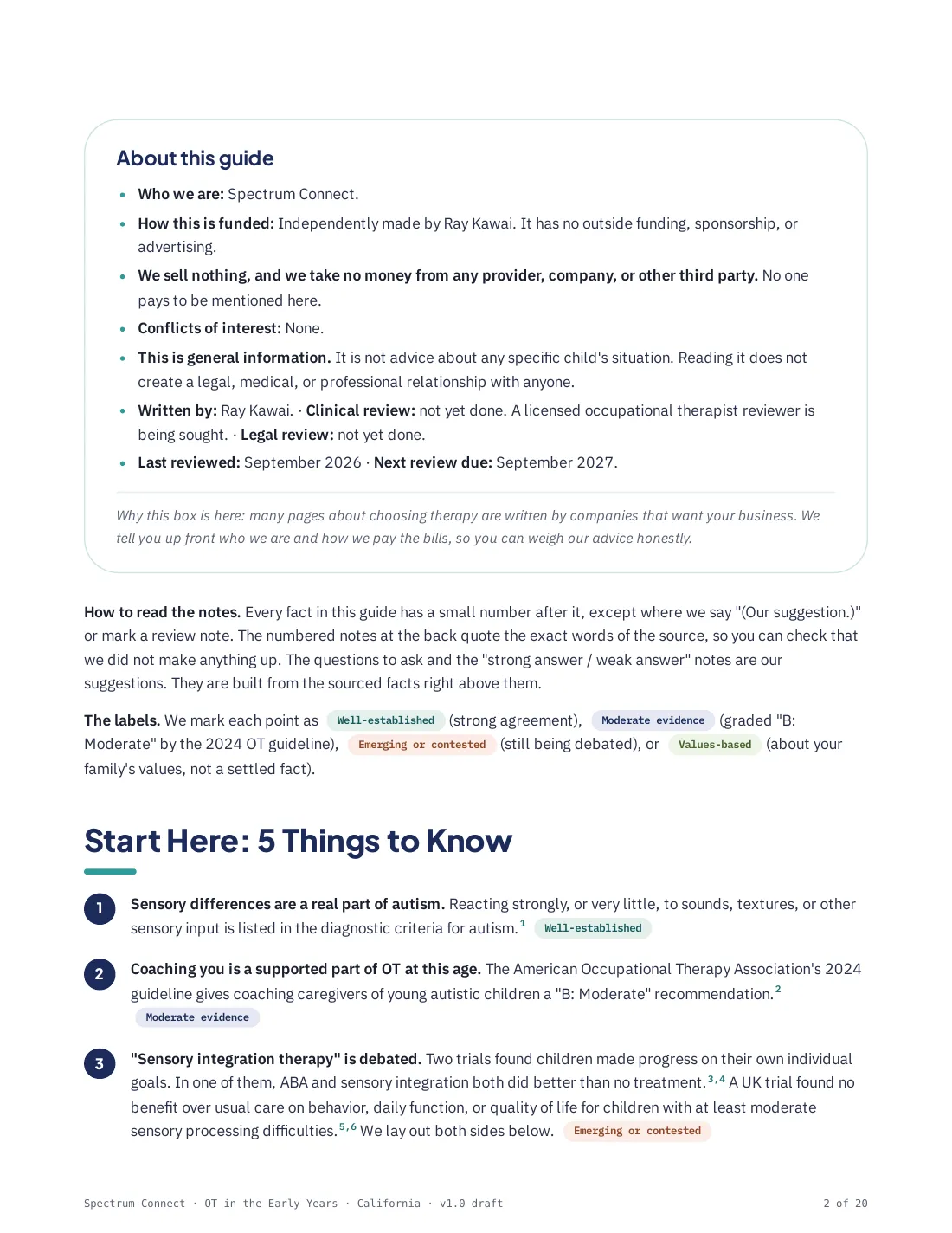
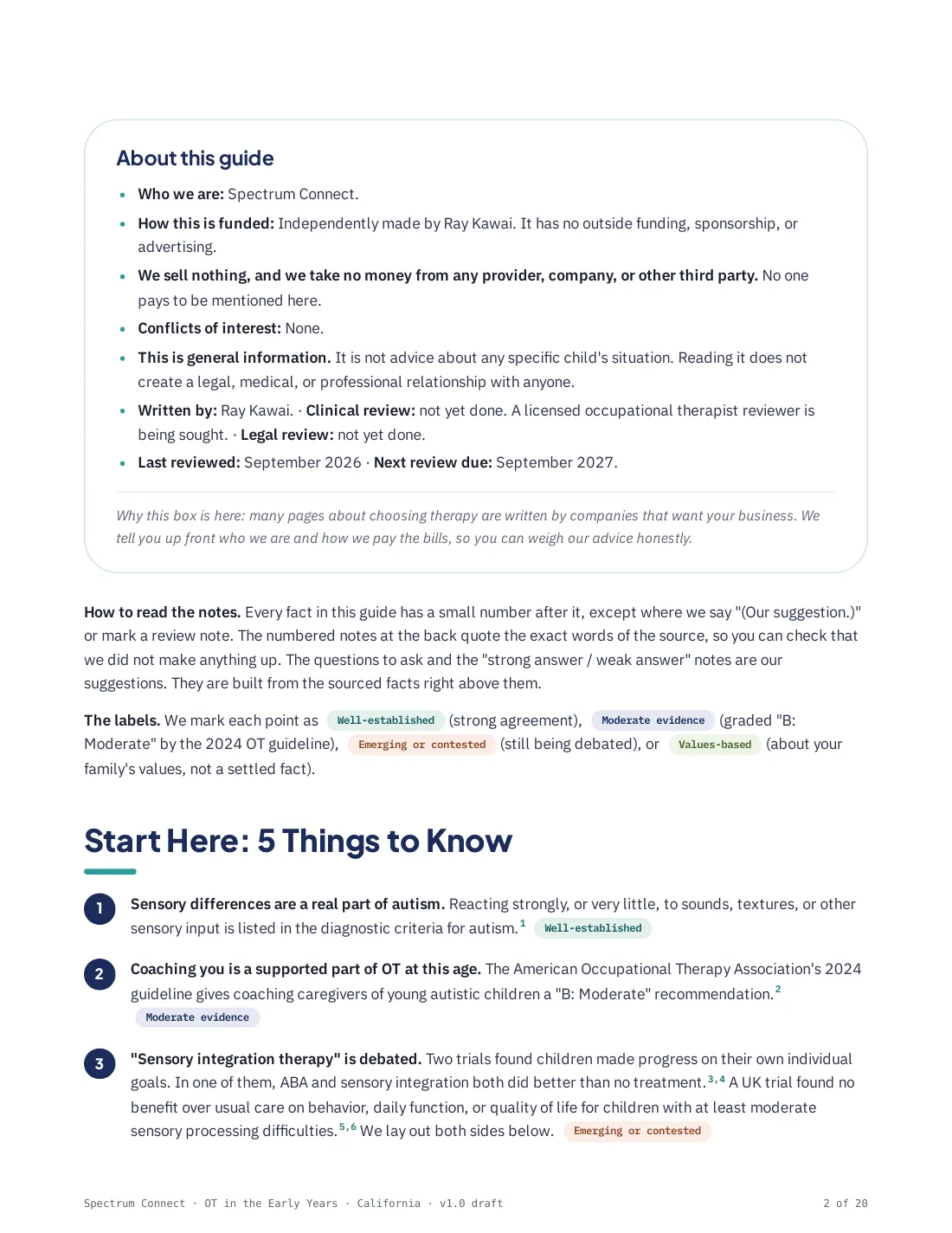
Page 2 of 20
Start here: 5 things to know
- Open page 7 full size (opens in a new tab)
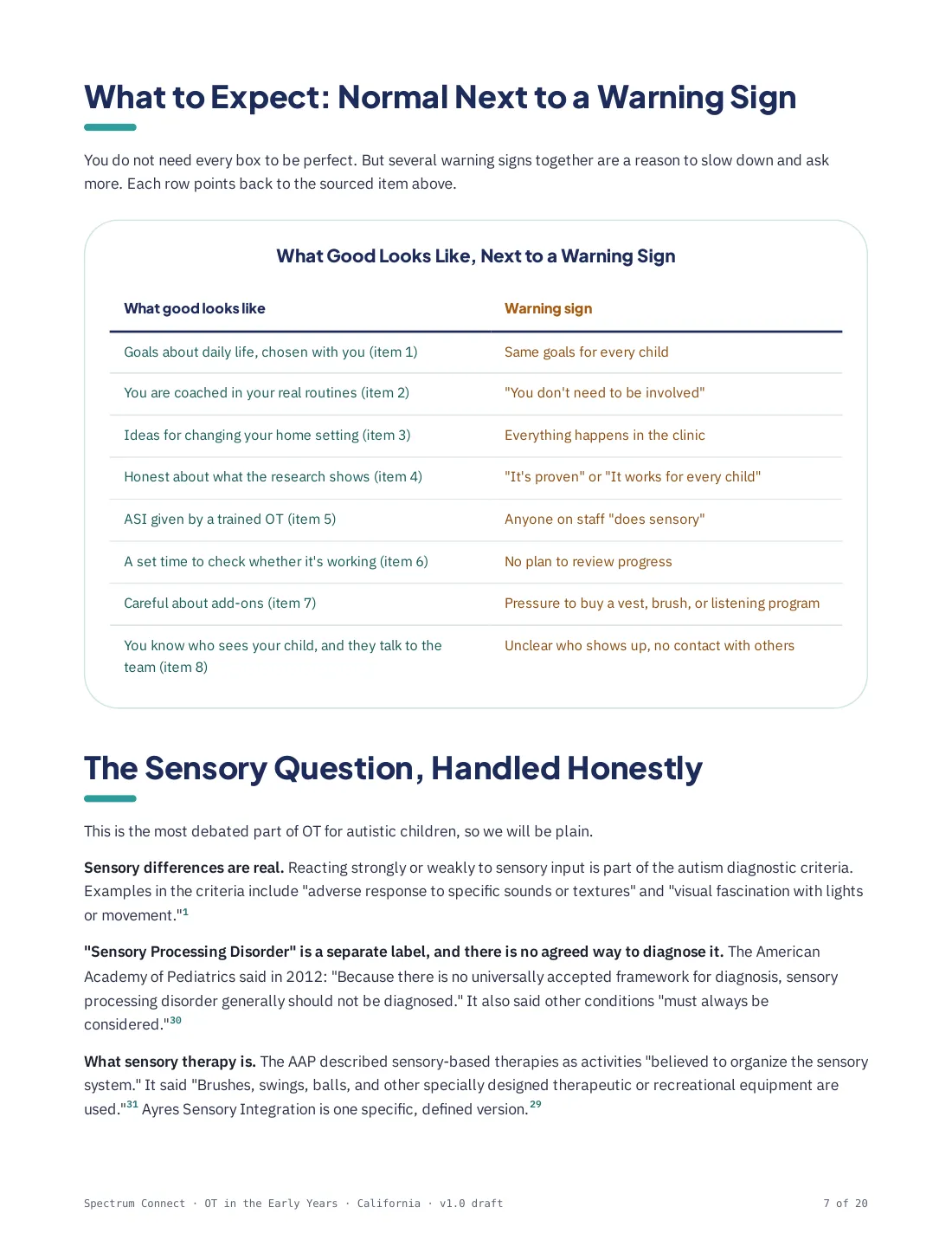
Page 7 of 20
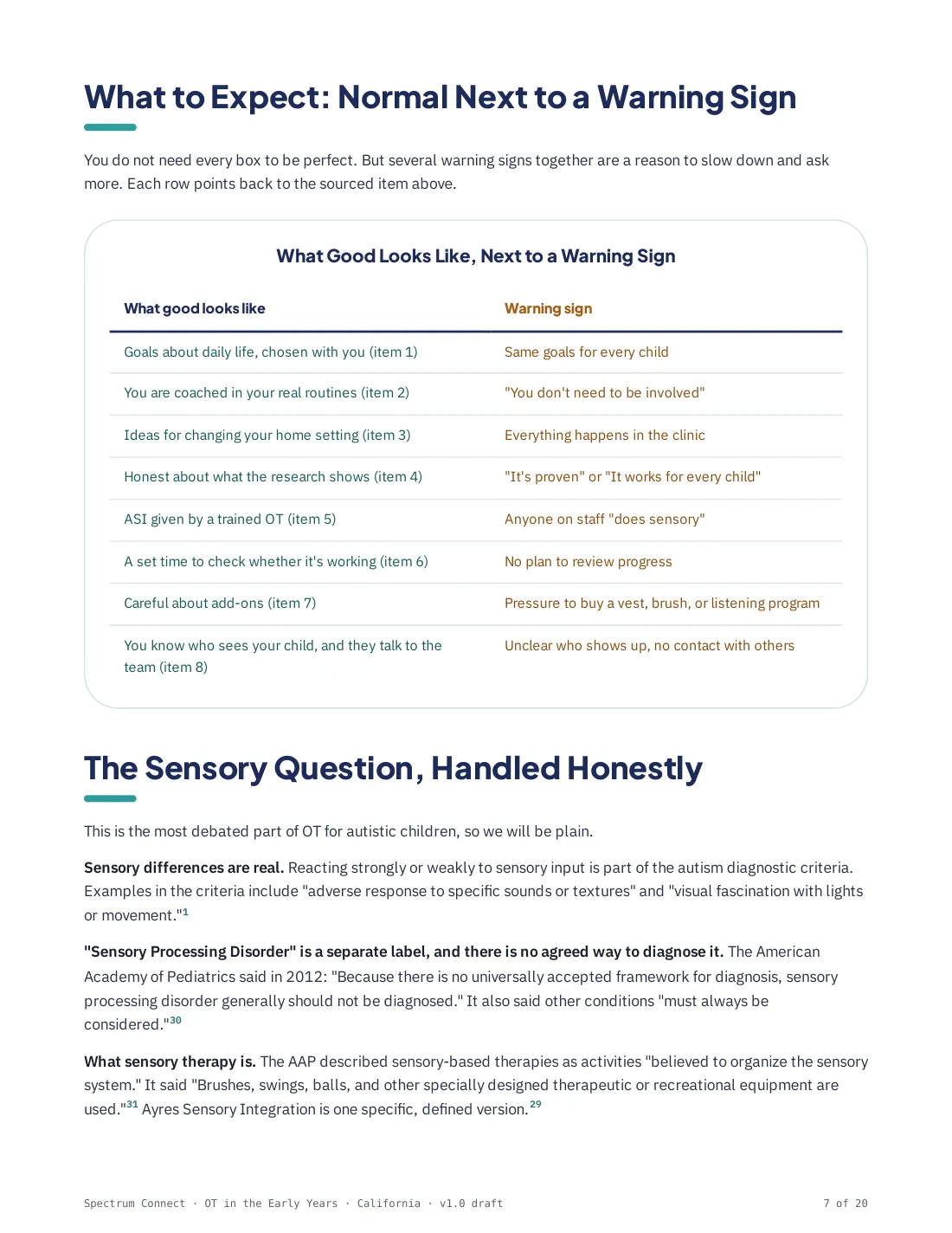
What good looks like, next to a warning sign
- Open page 9 full size (opens in a new tab)
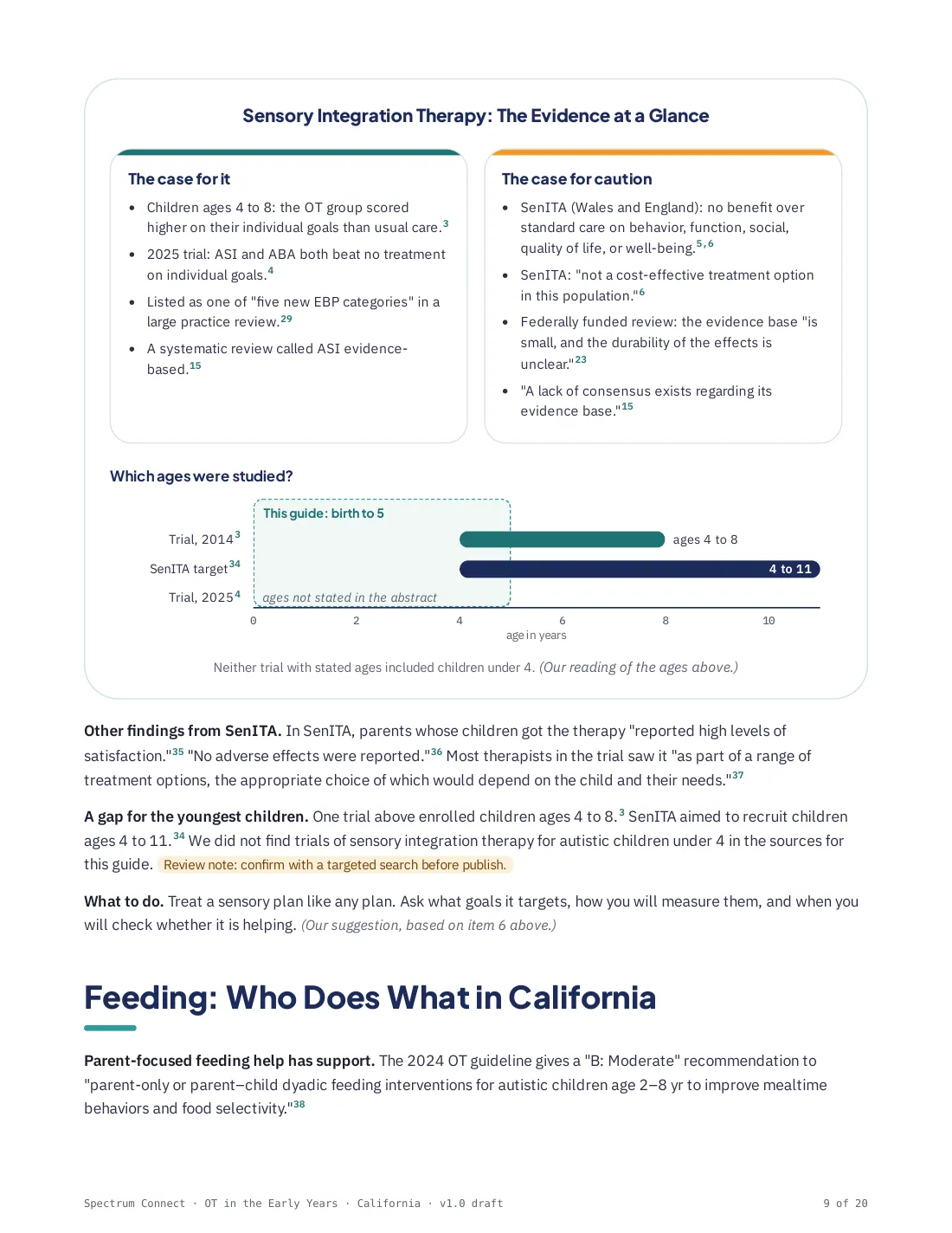
Page 9 of 20
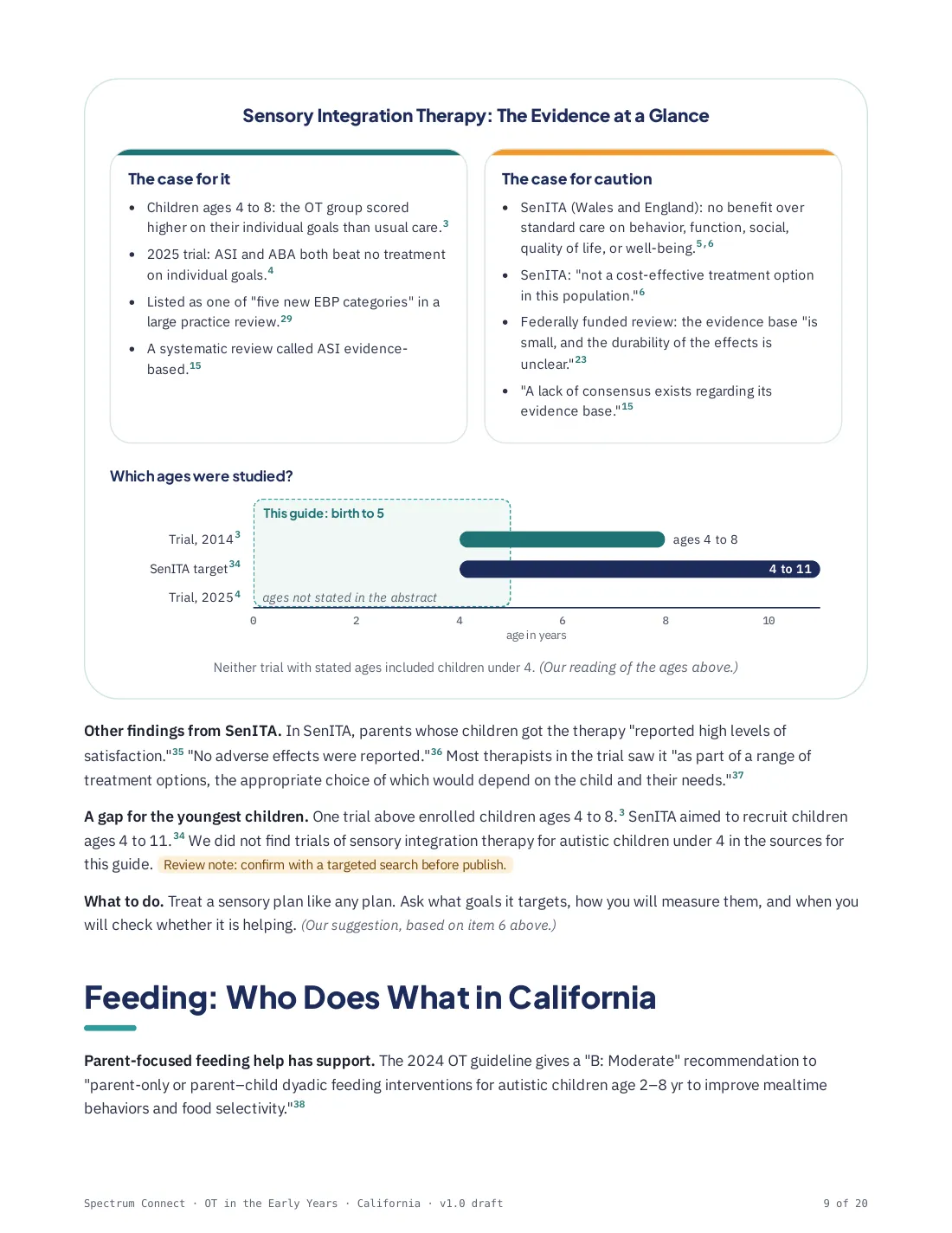
Sensory integration: the evidence at a glance
- Open page 11 full size (opens in a new tab)
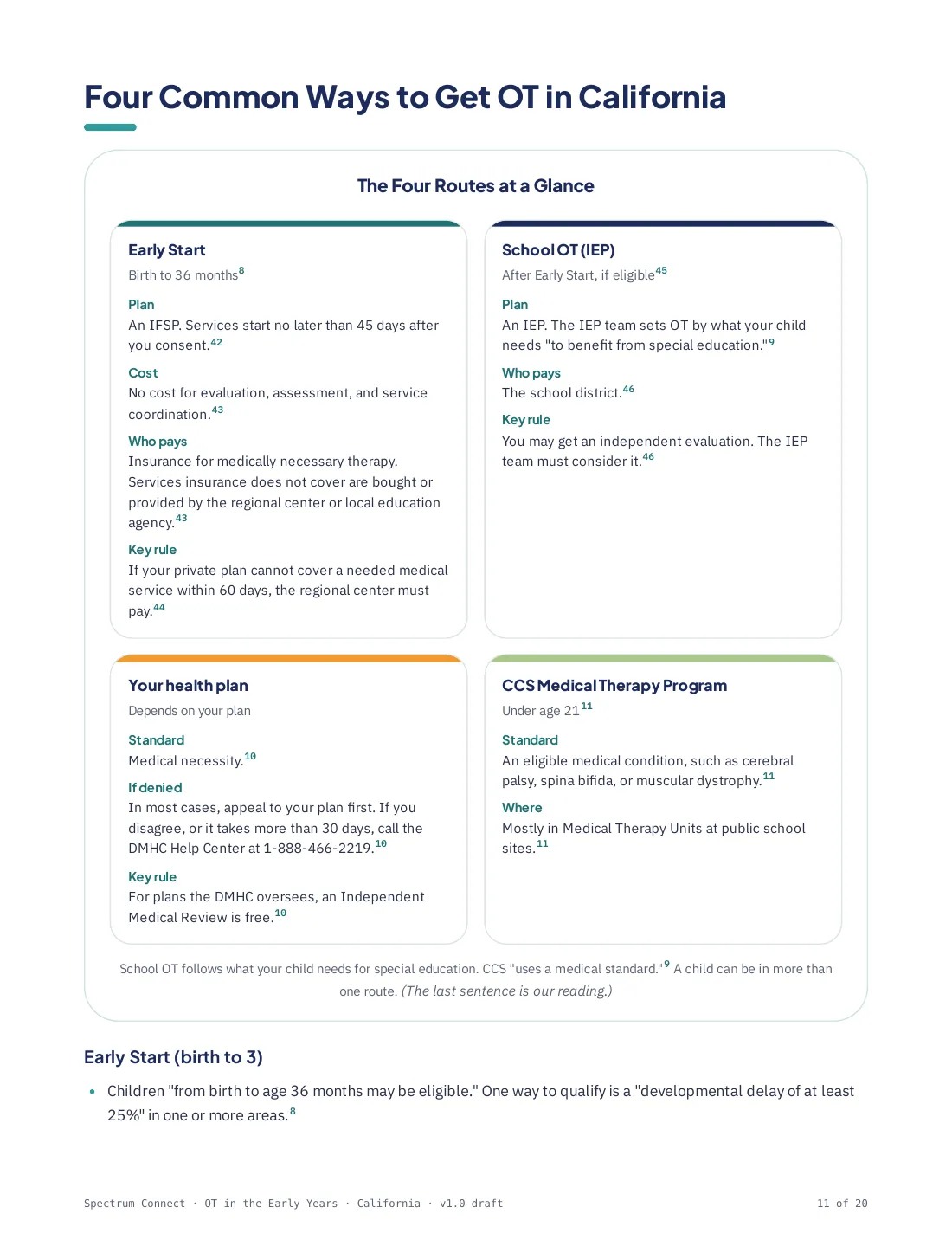
Page 11 of 20
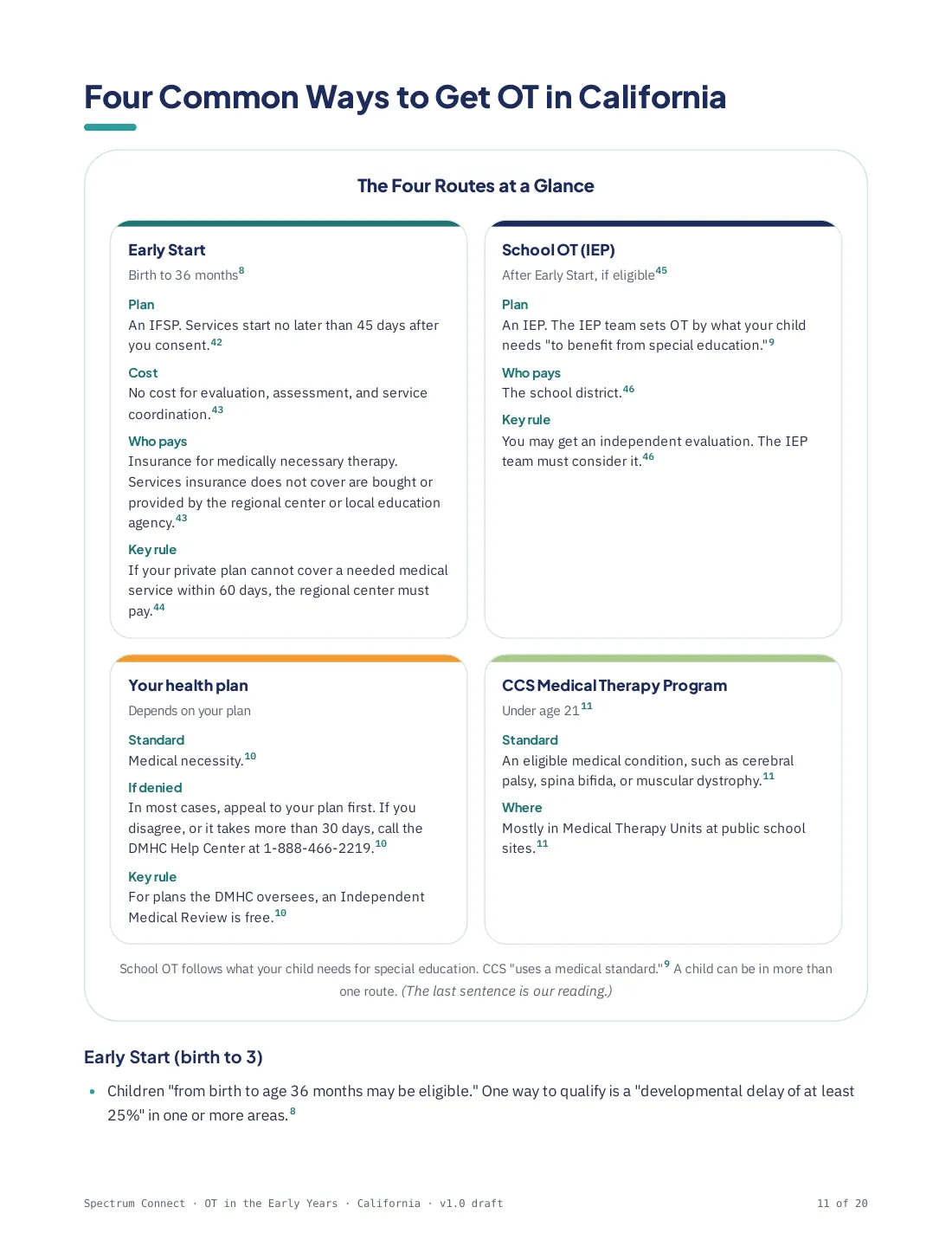
Four ways to get OT in California
Why you can trust it
Independent
Made by Spectrum Connect with no outside funding. We sell nothing, and we take no money from any provider. No one pays to be mentioned.
Every fact sourced
Each claim carries a numbered source from a professional body, a peer-reviewed study or a government record, and a label saying how settled it is.
Written for parents
Plain language, a question to ask out loud for every point, and what a strong and a weak answer sound like.
This guide tells you what to look for and what to expect. It is general information, not medical or legal advice, and it does not predict how your child will do. You know your child best.
Go deeper in the research library
Our plain-language reviews of the studies behind this guide.
Occupational Therapy (OT) – Daily Living Skills
Only a few small fair tests have looked at occupational therapists helping autistic children with everyday tasks like dressing, eating or toileting. Some look hopeful, but there are too few to know.
Limited evidenceWeighted Blankets / Deep Pressure
Not supported for sleep — the best study found no objective benefit, though children and families genuinely preferred it. Never use with a baby or toddler under about 4; documented suffocation deaths.
Limited evidenceHandwriting & Fine Motor Programs
Only one small fair test, plus a few tiny or indirect studies, has looked at whether handwriting programs help autistic children. Too early to say, but nothing harmful was reported.